
Welcome to a journey that will take us to the icy summit of Mount Everest. Amidst its breathtaking grandeur, is a somber reality that shrouds the mountain in mystery. A haunting testament to the risks and sacrifices of those who dare to climb it.
Are There Really Dead Bodies on Mount Everest?
Imagine stepping into a world where the air grows thin, temperatures plummet, and avalanches are a very real threat to your life. Climbing Everest means battling fierce winds, enduring freezing cold, and navigating treacherous icefalls, all while knowing that many who came before you did not survive.
The physical and mental toll is immense, demanding unwavering strength, endurance, and determination.
Mount Everest has claimed the lives of at least 300 adventurers who sought to conquer its heights. The perilous combination of altitude sickness, extreme weather, avalanches, and exhaustion has resulted in tragic outcomes for many climbers.
Estimates suggest that over 200 corpses still reside on the slopes of Mount Everest: A haunting reminder of the mountain’s deadly nature.
These climbers have left behind a solemn legacy etched in the snow and ice.
Does Anyone Ever See the Bodies?
You might be wondering if anyone passes by or actually sees the dead bodies on Everest. After all, it’s a remote area with harsh conditions. The short answer is Yes.
In fact, In 2018, an astonishing discovery unfolded on Everest’s unforgiving slopes. Lhakpa Sherpa, a seasoned mountaineer, stumbled upon the remains of eight frozen corpses during one ascent. Each body carried a tale of courage, sacrifice, and the challenges faced by those who dared to climb the mountain.
Can you imagine climbing past eight corpses and still continuing up the mountain?
Probably the most well known body can be found nestled along Everest’s treacherous Northeast Ridge route. This body is known simply as “Green Boots” because of the bright Koflach boots the dead climber is wearing.
The lifeless figure, identified as an Indian climber, has become an eerie landmark for mountaineers. The presence of Green Boots has served as a haunting reminder of the thin line that separates triumph and tragedy on the world’s highest peak.
Green Boots and many other climbers have remained frozen on Everest because retrieving them has proved too difficult or too dangerous.
Why Not Bring the Bodies Down the Mountain?
The treacherous conditions of Everest pose immense challenges in retrieving the bodies of fallen climbers. The extreme altitude, unpredictable weather, and difficult terrain make recovery efforts dangerous and often impossible, leaving these souls forever entwined with the mountain they sought to conquer.
Retrieving a person, especially a frozen one, from Mount Everest is an immense undertaking that parallels the challenges of climbing the mountain itself.
For the courageous rescue teams, these missions are characterized by unpredictability and peril. While some families have resorted to paying teams to recover the bodies of their loved ones, the exorbitant cost, averaging over $50,000, remains unattainable for many.
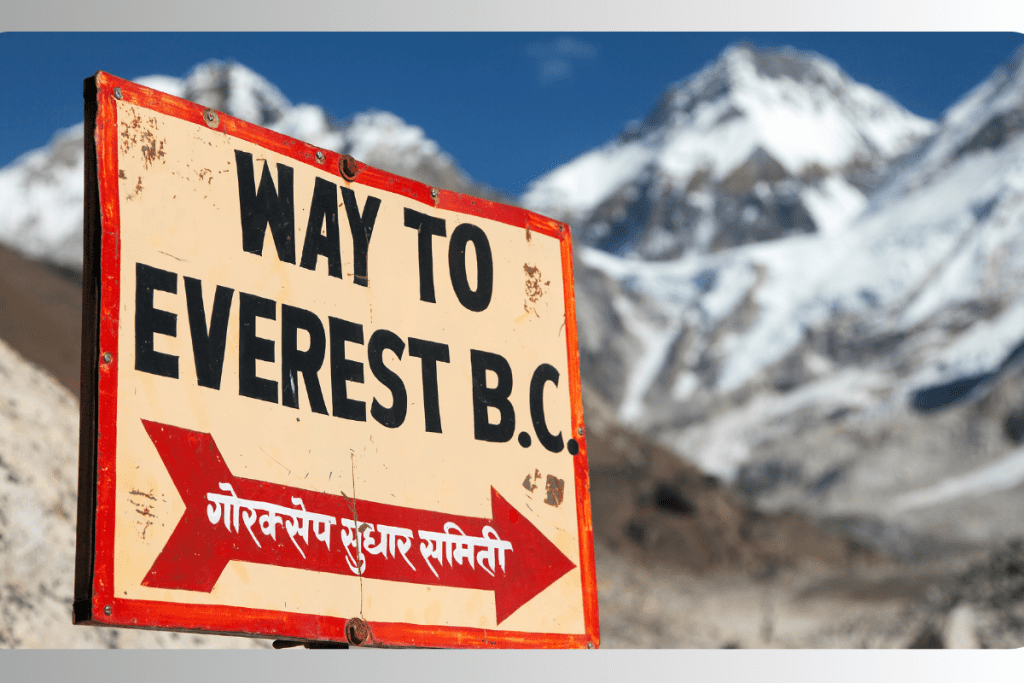
Sign leading to Mount Everest Base Camp
Engaging rescue operations on Everest entails not only significant financial burdens but also unpredictable risks, posing a constant threat to the rescuers themselves.
Tragically, some missions have even claimed the lives of rescuers, as exemplified by the 1984 expedition to recover a body. This mission claimed the lives of two experienced Nepalese climbers who were retrieving the body of a German climber.
Won’t the Bodies Go Away Eventually?
In most ecosystems, corpses naturally decompose or are swiftly scavenged by animals and insects, rendering the area inhospitable for extended periods. However, the unique environment of Mount Everest presents an entirely different scenario.
The hostile environment of Mount Everest renders it inhospitable to sustaining life, as anything left exposed for an extended period freezes solid. Remarkably, despite the profound cellular damage caused by the extreme cold, these bodies remain frozen in time, often retaining their original appearance.
Consequently, they remain preserved on Everest, instilling a chilling sense of fear in climbers.
Cleaning Up Everest
Growing concern surrounds the increasing number of climbers visiting Mount Everest, as it has led to the accumulation of both bodies and trash that now tarnish the once-pristine mountain environment.
Instead of leaving the mountain untouched, like they are supposed to, climbers and others have left traces of their presence on the mountain. Frequently travelled sections of the mountain no longer look pristine, but instead look polluted like a city street.
Recognizing the urgency of the situation, the Chinese and Nepalese governments have intensified their efforts to remove the garbage. However, the challenge of getting the scattered bodies down the mountain is considerably more formidable.
These bodies are dispersed across the slopes of Everest, with many located in extremely remote areas. Some climbers fell to their death or climbed into crevasses and caverns for shelter before succumbing to exposure.
Where Are the Dead Bodies on Everest?
What is even more disconcerting is the unsettling fact that some bodies on Everest are moving from place to place. The sheer force of nature in this formidable environment has the power to displace these bodies from their original resting places.
Moving glaciers can either carry bodies to inaccessible areas or crush them against massive ice blocks, making retrieval nearly impossible. In addition, powerful winds have been known to sweep up bodies and transport them to entirely new locations.
The stark reality of the dead littering Everest’s landscape poses ethical questions about the impact of human endeavors on the mountain’s sanctity.
The mounting pressure to remove a significant number of the deceased from Everest stems from multiple factors. Many families fervently desire the return of their loved ones, and the growing accumulation of bodies also poses potential risks for climbers.
Furthermore, some locals and Sherpas find it disrespectful to leave the bodies on the mountain, as it is considered an affront to the Gods.
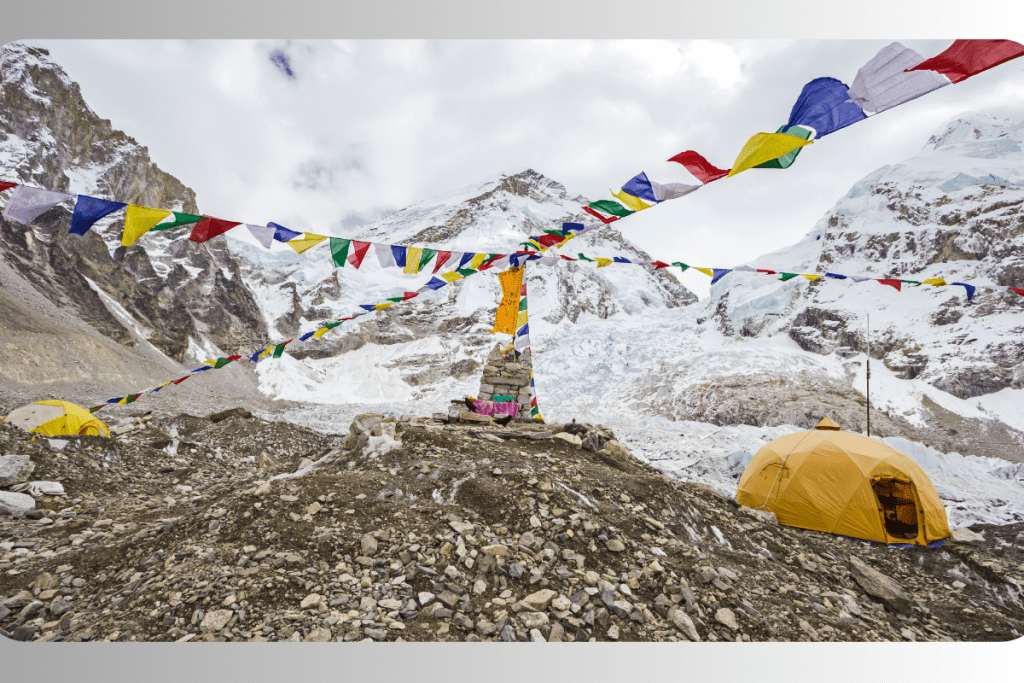
Base Camp at Mt. Everest
Leaving the Fallen Behind
The dead bodies scattered throughout the mountain has caused a moral dilemma for all involved. A heated debate surrounds the ethical implications of leaving the bodies of deceased climbers on the mountain.
Supporters argue that removing the bodies would disrupt the delicate equilibrium between humanity and nature. They believe the fallen adventurers died doing what they love and that keeping the bodies on the mountain honors the ultimate sacrifice made in pursuit of their dreams.
Opponents contend that a respectful and dignified approach to handling the deceased is essential. They advocate for retrieval efforts, emphasizing the importance of honoring the lives lost, providing closure to families, and upholding the values of compassion and empathy.
They question whether it is decent to leave them exposed to the elements for others to see.
Who Decides?
The question of whether a body remains on the mountain or is brought down lies in the hands of various stakeholders, including mountaineering organizations, authorities, and family members. The decision-making process is multifaceted, encompassing legal, cultural, and logistical considerations.
Sometimes the family will make the final decision, and bear the financial consequences, to remove a loved one from the mountain.
As we conclude our exploration of the dark side of Mount Everest, we are reminded of the awe-inspiring power and unforgiving nature of the mountain.
The dead bodies that remain on its slopes stand as eerie testaments to human ambition, fearlessness, and tragedy.
Remember to respect the awe-inspiring forces of nature and the sacrifices made in the pursuit of conquering its heights.
May the stories of these fallen climbers inspire us to approach life’s challenges with caution, preparedness, and a deep appreciation for the delicate balance between living and dying.